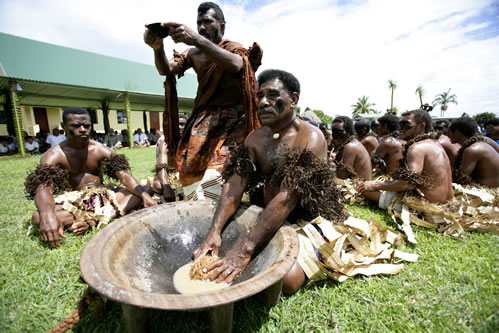
Fiji Sun front page(Fri. Sept. 8th 2006)-Landowners demand abolishment of N.L.T.B
Posted by Picasa


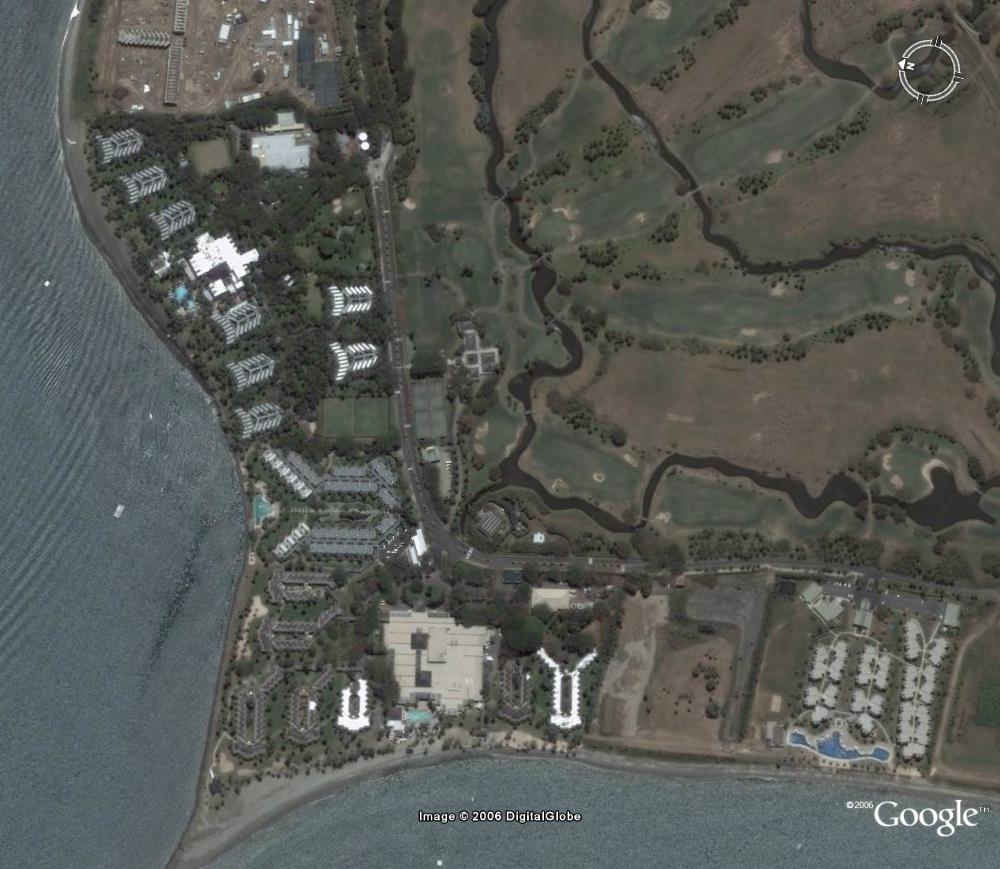
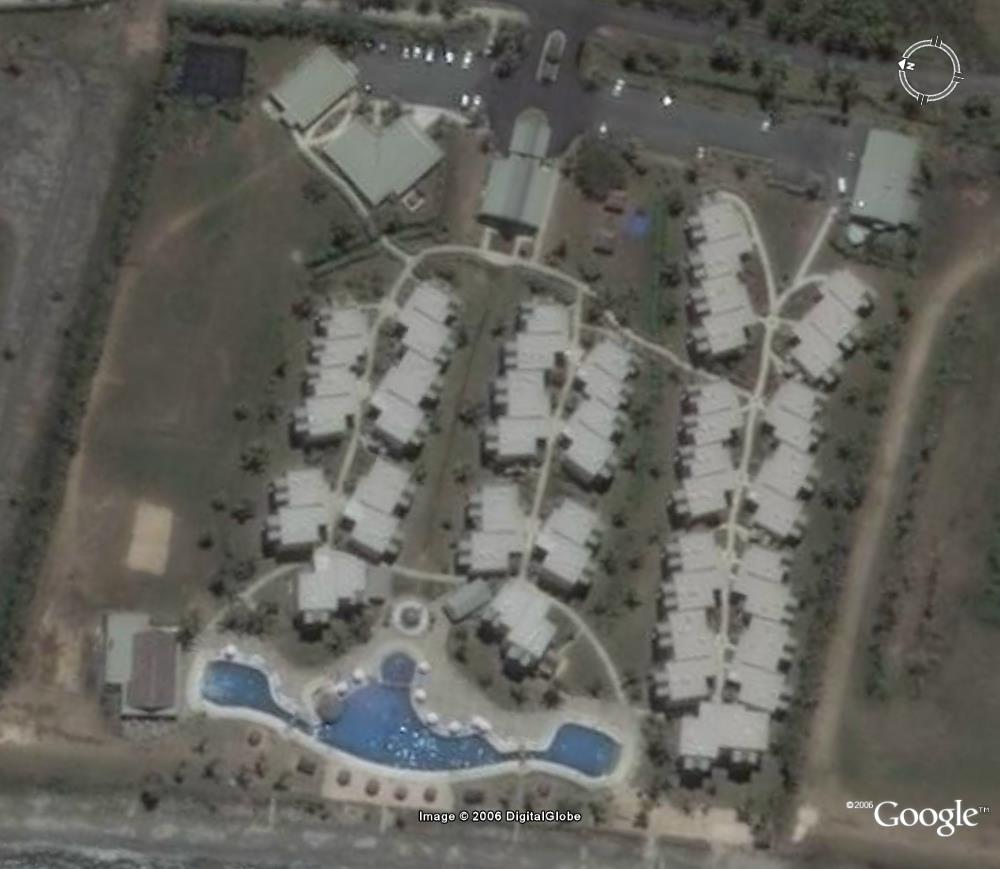 Above image: Soffitel Resort, Denarau, Nadi.
Defining the ‘Vanua’
Fiji Daily Post 6-Sep-2006
Closing remarks of Fiji Islands Hotel and Tourism Association CEO, Mereani Korovavala to the Joint Sector Standing Committee on Natural Resources and Economic Services on the Qoliqoli Bill.
The Fijian definition of the vanua is that it is the combination of the people and the land. Land includes qoliqoli. The people derive their identity and spirit from the vanua and vice versa. The level of interaction between and within each strata of the social structure, through the use of the land expresses the individual and tribes’ sense of affinity, communication and relations.
Removing the vanua from the people and vice versa, or splitting the vanua from established roles of each clan, and their role to the Chieftain household, strips both from their sense of being and identity. The qoliqoli as treated in this bill has been removed from this definition of vanua, as a separate base with its own raison d’eter and source of power. This is a serious caving in and/or splitting of the foundation of the identity and spirit of the Fijian people. Accordingly the gonedau or fisher clan has been treated as a separate vanua. The according of a separate lease for the qoliqoli demonstrates this separation.
Ownership and Stability
It is assumed that when legal authority is added to the base of Fijian legitimacy, ownership is both clarified and strengthened. This is a myth. For a chieftain system that is maintained through a combination of primogeniture and consensus, the introduction of the legal dimension correspondingly introduces a component that is foreign to the established chieftain succession formula.
The bill is relatively straightforward and easily managed when tenants are non-Fijians. When Fijians become tenants, and more importantly when individuals from the same vanua are lessees, the situation is significantly different from what is at present. The bill proposes the addition of the Fisheries Commission to the decision making machinery of so-called owners. Instead of the ownership being clarified, it is instead complicated further into a triumvirate.
This is a construction that retards efficient decision making, let alone confusing the idea of Fijian ownership. From this complexity, it is clear that the majority of ruling (adjudication) will become the sole prerogative of the Courts. The consequential question therefore is ‘who is the owner?’ It therefore becomes a question of who affords the best lawyers available. The outcome of that path is tacitly understood.
There will be a temptation, particularly from the NLTB standpoint, that qoliqoli be treated in the same way as land. Where the qoliqoli will be treated as kovukovu or sub-divided into mataqali and even tokatoka lots.
This is even more precarious for the basis of Fijian traditional power structure as the qoliqoli is the remaining vestige of communal ownership where the chieftain and the yavusa, mataqali and tokatoka conjointly share ownership, under the paramount chief of the vanua. Kovukovu will erode whatever is left of the Fijian chieftain authority in a real and practical sense.
When the chieftain authority is neutralised in a structural sense as this, the connectivity of the different clans in the Fijian social structure is lost, as they are only connected at the top. The kovukovu formula will replicate the same problems we are facing to date in the leasing arrangement, through the NLTB. Kovukovu will split the Fijian social structure, erode further chieftain authority and compound the same difficulties that current lessees are facing with new ones.
The revenue derived from this sub-division cannot be equated with the cost to the Fijians as a race, in the long term. The failure of the proper management of the proceeds from the leases of these resources by those responsible has been a cause of consistent tension. Using the NLTB formula of kovukovu under the Native Reserve Commission compounds existing difficulties.
The Government can extend ownership in the manner of the Qoliqoli Bill to underground and air space resources, but if the management of proceeds is not reviewed no amount of revenue will please the resource owners. The manner, with which proceeds are managed on their behalf, either promotes or ridicules their integrity and dignity as owners.
To turn these resources into money making endeavours per se without meaningful participation in development and active involvement in business reduces Fijian ownership and mana to timidity. When these happen the owners turn on the tenants. Mobilising support and unity is usually forthcoming in a situation of vagueness and confusion.
The moment clarity is achieved, the sense of unity and solidarity that had existed during the search for that clarity and perceived status, disappears almost instantly.
Again, the sanctioning provisions of the bill will neutralise the very same idea of ownership and control that the bill had intended to realise for the Fijians. By implication, the Courts have become the new owner.
Control and Stewardship
The bill as Fijians interpret is supposed to enhance their control over their resources. As has been indicated, that status of ownership is a shared one, where the ultimate decision making rests with the Courts. There is a fundamental responsibility of stewardship inherent in the status of the owner.
The fact that ownership is unclear, or at best, a shared one with the Courts as the final decision maker, renders the responsibility of stewardship as was supposed to be the expression of status and authority is under serious threat. The Government’s 2020 Vision document for Fijians and Rotumans has a number of objectives. The sum total of these objectives is to raise the level of participation of Fijians and Rotumans, in economic activities of the country to a level that corresponds with their ownership of resources.
The vigorous pursuing of those objectives means, that we should expect an unprecedented level of tensions among Fijians in particular, from promulgation date.
Conclusion
In sum the bill in its current form, is likely to neutralise the very same objectives it had set out to promote. Instead the bill should endeavour to achieve a state of balance (equilibrium) where absolute ideas that aggravates gulfs and frictions between groups, sectors and even intra-communities should be re-tuned, to one that embraces complimentarity.
Fijians and Rotumans cannot achieve the objectives of the 2020 Vision on their own. They need investors and others in a complimentary setting. The application of the idea of substitution in this case, has not catered for the misfit between the scenarios explained earlier. There is the false assumption that the Qoliqoli Bill will strengthen, or even replace, lost status and authority of the owners.
On the one hand, we are talking about strengthening the status and authority of the Fijians and Rotumans, on the other, legislating it in this manner, splits and reduces that authority from the paramount chiefs to the mataqali and tokatoka. Vanua Chieftains are therefore mere figure heads. The dilution of the Bose Vanua illustrates this, in the current set up. The bill is therefore desiring one thing and moving in the opposite direction.
As can be seen, this cannot and will not, give certainty to the desired goals of the Fijians and Rotumans in eternity. It is apparent that the Qoliqoli Bill in its current form needs to be re-worked in a lot of ways to avoid the outcomes stated in this paper. Ultimately, the base ideas that caused the creation of this bill are thin. I now leave these thoughts with you for your consideration. As a joint team of the Fiji Islands Hotel & Tourism Association, Tourism Resource Owners Association and Retailers Association - promoting the best interests of Fiji through tourism with you, our ruling Government, we find ourselves ‘between a rock and a hard place’. However, to ignore them, is to approach the future at our own, but known costs.
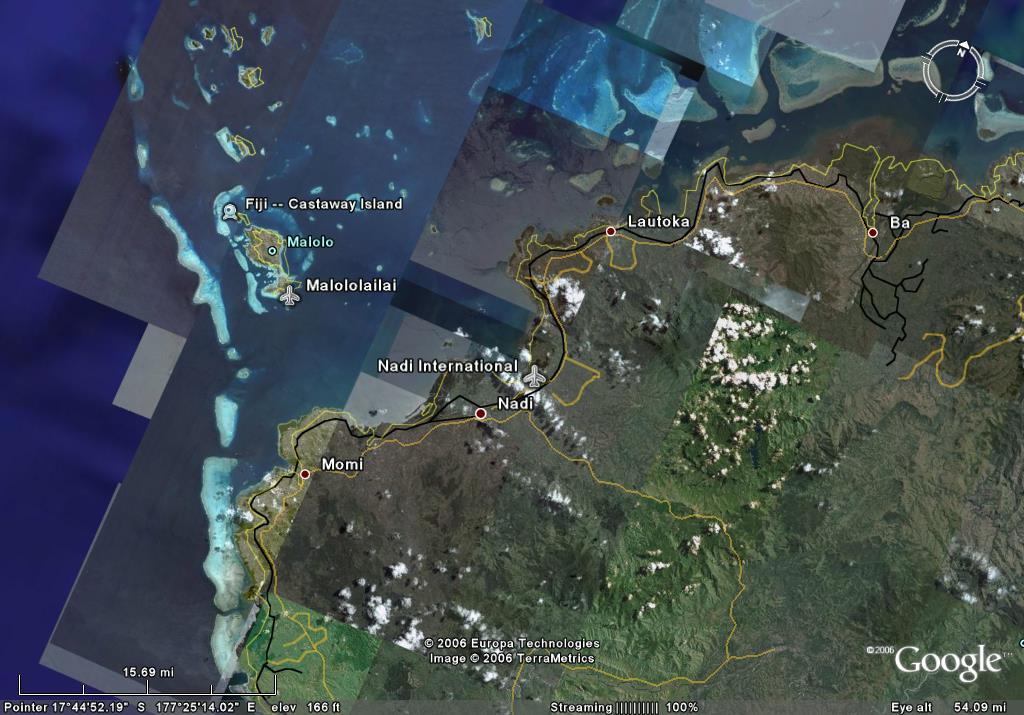 Above image: West Coast of VitiLevu, location of many tourism ventures.
Landowning unit files fresh legal papers against NLTB and developer
Fiji T.V-6 Sep 2006 18:54:50
A landowning unit in Nadroga disputing the validity of a native lease given to Natadola Holdings by the N.L.T.B. has filed fresh legal papers against the two groups.
The Tui Nahoni of Malolo, Ratu Apenisa Rakuro, and two other plaintiffs had withdrawn an earlier writ for reasons they would not disclose. [Landowners] argue [that] the N.L.T.B. did not comply with the Native Land Trust Act when obtaining the consent of the landowners and gave false promises to them.
The Plaintiff's spokesman Tevita Korodrau says they've filed a fresh writ with similar grounds at the Lautoka High Court today.
Distribution of monies from trust funds
24.(1) Monies in a Qoliqoli trust fund shall be applied or distributed by the Board in accordance with regulations made under the Native Land Trust Act.
(2) For avoidance of doubt, all rental income for leases and licences approved by the Board within Qoliqoli areas shall be paid to and distributed by the Board in accordance with regulations made under the Native Land Trust Act.
Parliament Committee receives more submissions on Qoliqoli Bill
Fiji T.V-6 Sep 2006 18:58:00
Indigenous Landowner groups have proposed alternatives for the Parliamentary Committee scrutinising the Qoliqoli Bill, to consider.
They would like to see the establishment of a Board, operating independently of the Native Land Trust Board.
The Viti Landowners Resources Association would like to see the establishment of a Native Qoliqoli Trust Board, which will consist of the qoliqoli owners from the 14 provinces.
With this as their challenge to the N-L-T-B. But they're not taking any chances. If the Bill is passed in its current form, then it leaves this group of Landowners with one option.
The Joint Sector Committee is expected to hand their report to Parliament in November.
Fiji Sun, Tuesday 5th September, 2006
Chiefs are born, not made
Former prime minister Major General Sitiveni Rabuka’s call to abolish the chiefly system is harsh. Although Rabuka, no doubt, has his reasons for making such a call.
The fact of the matter is that the chiefly system is an integral part of the Fijian culture. However, that is not to say that a review of the chiefly system is not warranted.
The current chiefly system has brought some disarray to the Fijian people. An increasing number of dissident groups have disputed decisions made by the Native Land Commission over the installation of chiefs.
In the process, divisions have been created among the people.
Fijians hold their chiefs in high esteem as someone who is sent from God.
To them, the chiefly lineage must be followed and revered; education or academic achievements are irrelevant when it comes to the appointment of chiefs.
The chiefs of the past ruled with great wisdom and had the hearts to serve the people.
These days, it is not the same.
It is a pity that politics and academic achievements have reared their ugly heads into the chiefly system.
This has lowered the chiefly system, as commoners, due to their academic qualifications are now chosen to take the places of chiefs in the Great Council of Chiefs and in the Senate.
This is alarming because, if not controlled, it will lead to the erosion of the chiefly system.
It is already taking its toll as evidenced by the rising number of self- promoted chiefs, who cause nothing but confusion and division among the Fijian people.
As a result, economic and social problems within the Fijian fraternity are becoming worse.
It is time to review the chiefly system and to institute changes immediately.
Only chiefs and no one else should be part and parcel of the GCC and it is there that chiefs will get their appointments to the Senate.
The Fijians of today need to be directed and it is only made possible if these God sent chiefs are brought back to assume their rightful roles.
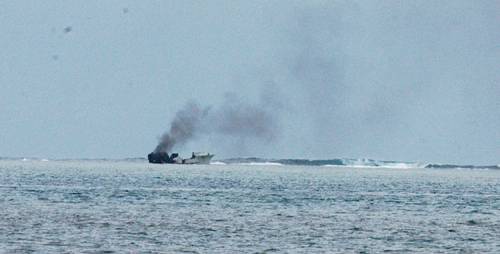 Burning wreck on Suva's horizon.
 Pic above: Burebasaga chiefs pose before the traditional welcome ceremony of Princess Anne, during her royal visit to Fiji in July 2006.
PINA's comment:
Monday, August 21, 2006
The Chairman
Sector Standing Committee on Administrative Services
Parliament House
Veiuto
Suva
Attention: Committee Secretary (Kalo)
Dear Sir
The Pacific Island News Association (PINA) wishes to comment, as invited, on the Broadcast Licensing Bill, presently under consideration.
Thank you for the opportunity to have our say on this issue of importance to all of the people of Fiji and the Pacific Region.
Our concerns revolve, for the most part around the media freedom issues inherent in the matter under discussion. PINA is committed to the preservation of Media Freedom everywhere and in particular in the Pacific.
Specifically our concerns are:
The Bill would provide the Minister for Information and Communications in Fiji with remarkable power to control the make up of the authority, the programming
advertising and technical codes.
The Minister would appoint (and remove) the members of the Authority. The Minister would have the power to formulate policy and give policy directions. The Minster would appoint the Secretary of the Authority. The Complaints Committee would necessarily consult the Ministry.
The Minister would make regulations without necessarily consulting the Authority
The Minister would determine the allowances paid to Authority members. The Minister will; formulate policies relating to broadcasting and give general and specific policy direction to broadcasters
Each of these areas on its own would be sufficient for PINA to wish to comment. Taken as a group they are sweeping controls that would have a remarkably deleterious affect on broadcast media in Fiji and as a consequence on Media Freedom in the country. Freedom would be at the convenience of the Minister.
The Authority, as supervised by the Minister, would develop an Advertising Code and a Programming Code and would oversee the implementation of the codes. These codes already exist and work well under the Media Council of Fiji’s administration.

Media ownership is a public trust. This means that whoever owns a media organization does so on behalf of the people and should therefore not use it to destroy any individual or group. This also means that the government must stop its practice of regarding the media as mere propaganda instruments to disseminate only information favoured or favourable to it..
>
>Each of these conditions is vital to any commercial
>broadcaster and reflects directly on the costs of that
>broadcaster. Some commercial broadcasters are listed
>companies on the South Pacific Stock Exchange and as
>such have obligations to their shareholders and to the
>stock exchange system. These proposed regulations
>would fly directly in the face of the necessary
>business activities of these listed broadcasters and
>whether listed or not, each commercial broadcaster
>must make a return on the investment made to establish
>the business.
>
>Such regulations work against the necessary business
>activities of commercial broadcasters
>
>
>
>Cross media Ownership
>
>Further the media cross ownership issues would be
>determined by the terms of the Broadcast Licensing
>Bill as and when it became an Act.
>
>It is PINA’s view that cross media ownership in this
>modern world is an issue that should be separately
>deliberated upon and many other factors should be
>considered – where does the internet fit, how will the
>management of spectrum affect all of the parties
>interested in their use to the benefit of the
>community.
>
>Spectrum management
>
>As we understand the plan, there would be one group of
>Authority responsible for administering Broadcast
>spectrum and another assigned to the management of the
>rest of the spectrum. Surely it will be simplest and
>most cost effective to have one over all authority
>handle the administration of the entire spectrum.
>
>Further, there is underway at this very moment, a
>review of the telecommunications system in Fiji.
>Surely this matter should be resolved before any
>further licensing restriction is imposed.
>
>
>Advertising Code
>
>PINA fails to understand why the bill would impose
>restrictions on the content of advertising to the
>extent that the bill proposes.
>
>Why restrict the advertising of prescription
>medicines? These are advertised widely in North
>American broadcast systems.
>
>Present licenses allow the advertising of alcoholic
>beverages – why impose restrictions?
>The amount of advertising permitted will be determined
>by the audience by way of their “remote” switch. Why
>regulate it?
>
>Broadcasters make an important contribution to
>election coverage in the country. Why should political
>parties or candidates be restricted from advertising
>as long as the party is identified?
>
>The result of such a restriction would be severe
>cutbacks on expensive election coverage and a negative
>affect on the prospects of a political party in a
>modern democracy.
>Programming Code
>
>All of the components of the potential programming
>codes are presently covered in the Fiji Media Council
>Code of Ethics and Practice.
>
>There is no need to change the system so that all of
>what a broadcaster does becomes subject to the
>jurisdiction of the courts as proposed to the less
>obtrusive and less costly present system.
>
>Our preference would be to endorse and strengthen the
>Fiji Media Council system and require that all
>broadcasters become members of the Council along with
>all other media. The Ministry of Information and
>Communication is already represented on the Fiji Media
>Council.
>
>There are many concerns in this proposed legislation
>for PINA – but the main one is the restriction on
>Media Freedom.
>
>It is our preference, while recognizing the need that
>spectrum is effectively managed, that this be done
>without the considerable restrictions revealed in the
>proposed Broadcast Licensing Bill.
>
>Yours sincerely
>
>
>Ken Clark
>President
>PINA
ARTICLE 19 welcomes the fact that the Fijian government is moving forward with this longoverdue initiative to put in place comprehensive broadcast legislation and to put broadcast regulation in the hands of an independent body, instead of a ministry, and to set clear rules for licensing.
This is a key element of democratic media oversight and it reflects the practice in other democracies. Until now, broadcast regulation and, in particular, licensing, in Fiji has been conducted in an ad hoc manner, in the absence of clear guiding rules, and by the government.
This has resulted in a patchwork of often unclear licenses, which normally contain no or only very minimal public interest conditions.

Envoy was coup backer
Army queries diplomat post
BSamanthaHA RINA
The military is baffled at the recent appointment of what it calls a coup perpetrator as a diplomat. It expressed reservation at the appointment of Ratu Epeli Kanaimawi, as Fiji's high commissioner to Malaysia claiming that his involvement in the 2000 political crisis was common knowledge.
as the chairman of the Assembly of Christian Churches, he asked the army commander not to pursue charges against personnel involved in the 2000 crisis, army spokesman Major Neumi Leweni said yesterday.
Furthermore, he was one of the four people that lobbied the President, Ratu Josefa Iloilo, not to appoint Laisenia Qarase as the interim Prime Minister because they wanted Adi Samanunu (Cakobau) instead to lead the caretaker government.
Because of his involvement in the 2000 coup, Major Leweni said the military could not comprehend the reasons behind Ratu Epeli's appointment.
“However it'’s the Governments choice and they should be able to tell the public their reasons for appointing such people, he said. Prime Minister Laisenia Qarase did not wish to comment yesterday saying only that if there were allegations against Ratu Epeli, they should be referred to the police.
Minister for Foreign Affairs Kaliopate Tavola and his chief executive officer Isikeli Mataitoga could not be reached for comments after their mobile phones were switched off.
Converted coup convict Maciu Navakasuasua had identified Ratu Epeli as one of the church leaders that had rendered their support to those involved in the illegal takeover of 2000.
Ratu Epeli, he said, had also been considered by the George Speight civilian government as a possible candidate for the Prime Ministers position in 2000.
Mr Navakasuasua named Ratu Epeli, Pastor Poate Mata and then Methodist church president Reverend Tomasi Kanailagi as strong supporters of the illegal act.
Ratu Epeli had earlier told the Fiji Sun on Sunday night that he would comment on the issue once he received a final confirmation from Government concerning his posting.
NLTB must come out clean
By MAIKA BOLATIKI
Political Editor
It is time that the Native Land Trust Board cleared the air on allegations levelled against it by landowners. Some landowners have lost faith in the NLTB, an institution established with a legal obligation to act in the interests of the landowners.
Some landowners are not happy with what has been happening and this is because they are not well informed of the changes made.
According to the NLTB website, the Native Land Trust Board was established under the Native Land Trust Act of 1940. It comprises the President of Fiji as president, the Minister for Fijian Affairs as chairman and a 10-member board of trustees.
The board may delegate some of its powers to the general manager who with other officers carries out the board's plans and instructions.
The primary role of the board is to administer native land for the benefit of the indigenous landowner. As custodian of Fijian owned land, NLTB recognises its responsibility to the indigenous landowners and the nation to ensure that land and natural resources are used and managed in a wise and sustainable manner.
The board must also ensure that the unique and important features of the Fijians natural and cultural heritage are set aside and protected for the benefit of present and future generations.
The NLTB, as administrator of the largest tract of landmass in Fiji, plays an important and essential role in the development of Fiji. It is required to make available native land that is outside reserve for development.
However, in doing this, the NLTB is statutorily required to satisfy itself that the land to be opened up for development will not be required by its native owners during the currency of the lease or licence.
The board is required to collect land rentals and distribute them to landowning units according to a formula prescribed by law.Not under false pretences!
The NLTB is the body that links investors to landowning units who own the land earmarked for any type of development and it is therefore important for investors to contact the board if they intend to use native land for development purposes.That role can now be undertaken by landowning units under strict legal defintions, as demonstrated by the Monasavu compensation case.
Landowners can be rest assured that the NLTB is an institution specifically established for them.
However, it now seems that the landowners and the NLTB are not working as a partners.Why is this happening?
Do NLTB officers often visit landowners to discuss with them of the BoardÂ’s role?
There is not enough communication and this must be addressed.
Some landowners have even suggested that they administer their own land and not the NLTB.
They should be reminded that the importance of the NLTB stems from the tasks it has been assigned to carry out under the Native Land Trust Act.Point of contention from S.i.F.M for the editor that, laws can be amended to take into account the non-performance of the trust guardian. By all defintions, the trust guardians have wilfully breeched the fiduiciary rights of the land owner. A cardinal sin.
The institution website says principal among these is the requirement to administer native land for the benefit of the Fijian owners. As native land continues to be opened up for development, it would be cumbersome and irrational to expect a potential investor to visit every single member of the landowning unit for assent to lease.
Another problem that may arise is the irregularity of lease conditions. The board has the expertise needed by the indigenous landowner to effectively manage his land.
It is sad that a group of landowners has filed a court in junction to stop tourism development work on their land after the NLTB allegedly made payments based on forged documents.
Why should it be sad for the landowners? Apparently the only distress is clearly on the N.L.T.B side.
The Tokatoka Nahoni, which includes villages of Naveisabasaba, Vusama, Batiri and Togobula in the Tikina of Malomalo in the province of Nadroga/Navosa claims that the board conned them with false promises.
Spokesman Ratu Tevita Korodrau said a $10,000 payment was not made to the right people.
Tui Nahoni Ratu Apenisa Cokanauto Rakuro and three other members of the Tokatoka filed an injunction application against the board and Natadola Holdings Limited.
The NLTB officials put together a list of people that agreed to the payout, said Ratu Tevita.
"“We found out later that 11 of the signatures were forged. These people said they never signed the documents.
“When I went to enquire about the payment the NLTB statement of royalty payment and proceeds no 2/2005 stated a total income received of $10,537.46 but total distribution payable was zero,
The NLTB must clear the air on this allegation because it is very serious.
How can NLTB officers be part of an illegal act of obtaining forged signatures of some landowners?".
I know the matter is now before the court but a least the NLTB should issue a statement on the matter. The landowners used the media to air their concern and the NLTB should follow suit.Using the Fiji Sun political editor as a mouth piece, they just did!
Another case that the NLTB must clear the air on is its involvement with Mr Ballu Khan.
The wife of the jailed Turaga na Qaranivalu Ratu Inoke Takiveikata, Vilisi Takiveikata alleged that Mr Khan, Mr Bakani and representatives of Pacific Connex had visited her husband to seek his support for the issuance of their mobile telephony licence.
Again this is a serious allegation and the NLTB must clear the air.
Did they actually visit the Turaga na Qaranivalu?
That was confirmed by 3rd party witnesses in Prison.
Who was behind this visit?
God knows.
Answers have to be provided.
Landowners must accept the changes[in laws.]
They should be mindful of the fact that the NLTB's first priority is to safeguard the native owners by ensuring they have enough land for their use, maintenance and support. The surplus is then available for national development.
This first priority claimed by N.L.T.B, as well the political editor has failed beyond the perimeters of a joke.
Mr Bakani in a release issued at the weekend said the board had adopted a more commercial approach to the utilisation of native land.This commercial approach adopted by the N.L.T.B cannot be undertaken at the expense, without consent or without compensation of the landowning units in Fiji. The track record of Native Lands Trust Board speaks for themselves.
[Bakani] said the landowners now expected the NLTB to be more than just a leasing agency.
The landowners continue to wonder why the cannot negotiate for themselves, without a proxy organization with fraudulent streaks.
In its search for new sources of income, the board is concentrating on tourism, which is expected to become the largest revenue earned for the landowners. New leases have been issued for major investments ad smaller projects.
The NLTB manager confirmed that, this year, tourism lease revenue is expected to be more than $10 million.
Land use studies in the Suva-Nausori, Lami and Lautoka-Nadi areas, had identified opportunities for further residential commercial, industrial and agro-based development. These are being actively pursued.
Through the partnership with the Government and the Housing Authority to provide land for low and middle-income tenants, the NLTB generates more income for landowners.
That point is unsubstantiated by 3rd party research
In another initiative to create better returns for the landowners, the board has established the Vanua Development Corporation (VDC). This will invest in ventures promising an attractive return, with an acceptable risk. These will utilise the NLTB's expertise in land and specific business skills of private sector partners.
The VDC's Pacific Connex joint venture aimed to promote participation by the landowners in the information, technology and communication sector.
The company's proposed mobile phone venture would give the landowners access to a growing business.That false claim of cell phone business potential echoed unresponsibly by the Fiji Sun political editor requires an independent feasibility study to confirm that. In addition this disease of lobbying for Pacific-Connex has transfered to the Fiji Sun political editor, Messr Maika Bolatiki.
The NLTB is playing its role but there seems to be a breakdown in communication.
Some landowners want to carry out developments without the consent of the NLTB.
That sad reality is the reverse, which the political editor finds difficult in understand that, N.L.T.B has unscrupolously leased native land with forged consent forms of landowners for development.
[Landowners] must remember that the NLTB is for them and it is the guarantor of all lands.
The law specifies clearly that native lands cannot be sold; and any dealings or works to be done on or with respect to the land requires the approval of the majority of the members of the mataqali that are over 21 years of age.
Legally the final approval/decision rests with the NLTB.
The above premise is both legally unfactual, as well as logically unsound.
Although native lands cannot be sold, they can be officially leased with the consent of the mataqali landowners, through the NLTB.
Once leased they naturally come under the ‘western’ system of land tenure for the duration of the lease.
The advantages of the traditional tenure system for the taukei is that it has firstly, prevented outright land sales and land speculation, and thus has ensured that they have not become a landless people in their own country.The hollow theat of landlessnes, which N.L.T.B keeps sheltering behind has outlived it's usefullness, especially when the native right to land is enshrined under the 1997 constitution.
Secondly it has helped the taukei to maintain their land-based customs and traditions, which are based fundamentally on the maintenance of family and kinship ties, and ultimately on the basic principles of sharing and caring - a principle that has prevented the Fijians as a whole from being swept away by the materialism of the modern age.The only reason why the N.L.T.B does not want the rapid knowledge aquisition of landowners is that their abuse will continue to run rapid without control. The land-based customs which N.L.T.B wants to perpetuate is passive timidness as well the non questioning of decisions. It is especially desired for the landowner not to progress.

New Fiji ambassador to US face delays
Wednesday September 01, 2004
Fiji's new ambassador to the United States may not take up his post until next year.
An official in the Prime Minister's Office says the Bush Administration is not likely to process the Fiji government's nomination until after the US presidential elections in November.
The official says all new appointments to head missions in Washington including Fiji's nominee Sitiveni Rabuka will not be finalized until after that.
Paula Navunisaravi the Charge de Affairs in Fiji's Washington Mission will act as head of mission in the meantime.
Foreign Minister Kaliopate Tavola earlier said the Government hoped to have the Washington position finalized before the end of the year.
Source: Fiji Broadcasting Corporation Limited
Clan seeks land stop-work order
Saturday, August 26, 2006
A CLAN has applied for an injunction to stop the construction of a nursery on a piece of land that it claims was illegally leased by the Native Land Trust Board.
Members of the Tokatoka Nakabasi allege that NLTB and Natadola Holdings Limited failed to honour an agreement made with members last year.
The writ was filed in the High Court in Lautoka on Thursday by the clan led by Tui Nahoni, Ratu Apenisa Cokanauto Rorovanua Rakuro, Ratu Timoci Volavola, Ratu Tevita Korodrau and Ratu Viliame Uqeuqevanua Ralulu.
The statement of claim alleged that NLTB sought a piece of land owned by the Tokatoka Nakabasi of Naveisabasaba Village in Nadroga and allegedly promised to pay members a premium of $50,000. It is alleged that when it was found that Tui Nahoni owned the piece of land in question, NLTB sought to secure a lease for the 20 acre piece of land.
The land known as Vile, on which Natadola Holdings is building a nursery, was the only piece of land on which Tokatoka members used to plant crops and vegetables for their sustenance.
The plaintiffs allege that 11 of the 26 signatures on the purported document of consent were forged. [Plantiffs] claim that the consent was not sought from the members of the Tokatoka, especially the Tui Nahoni.
The writ was also filed on the grounds that under Section 9 of the Native Land Trust Act, native reserve land cannot be leased unless it was de-reserved.
Our chief is not for sale
Leave jailed Qaranivalu alone, elder warns
By CHEERIEANN WILSON
Stop using our jailed chief for your own business interest, a chiefly elder warned yesterday. And he wants the Government to stop such people from visiting his chief in prison. A chiefly elder of the Qaranivalu, Maika Morovia, said the Government had enjoyed the support of Ratu Inoke Takiveikata while his people continued to suffer.
Mr Morovia said the actions taken by millionaire Ballu Khan and Native Land Trust Board general manager Kalivati Bakani were a breach of traditional protocol and principles and were signs of disrespect for the Fijian people and, in particular, the people of Naitasiri.
“Who are these people?” said Mr Morovia.“They are in no way related to my paramount chief. They don’t even have a traditional role or status to allow them to speak to him. They should respect Fijian protocol, especially the way people of Naitasiri respect their chief.
“Bakani, being a Fijian, should have some manners. Our chief is there serving his term in prison and I believe he has had enough of the sufferings and heart-aches that he has gone through along with his family.“Ballu Khan and Bakani again want to engage my chief’s support and no one knows they might crucify him again if he fails to live up to their agreements.
The chiefly family and Naitasiri are not in a position to foot any further legal bills.“Ballu Khan is a millionaire and is engaging chiefly Fijian support to raise his business undertakings to new heights.“If he wants a business licence from the Government than he should be made to follow the normal procedure that all businessmen go through.
It is now clear that certain people are accommodated in special ways because they are already millionaires.“Ratu Inoke is not the Minister of Finance or a bank manager. Khan is using my chief’s support for his personal gain. What Khan and Bakani have done is an insult.
“They will ruin money lending institutions, the NLTB and the traditional Fijian protocol system. Authorities concerned should step in and stop them.”Calls made to Ballu Khan were not answered last night.
Ratu Inoke’s former wife, Vilisi Takiveikata, told the Fiji Sun that millionaire Ballu Khan and Native Land Trust Board general manager Kalivati Bakani, representatives of Pacifc Connex, had used Ratu Inoke as a rubber stamp so they could obtain a licence from the Government to launch a mobile phone business.
“Ratu is in prison and yet these people are still using his influence on the Prime Minister to get what they want,” she said.“If they really care about Ratu they should be lobbying for his freedom. Instead they are using him to get their millions while Ratu and his family suffer in silence.”
Digicel and Ba
I WRITE to express my disappointment at the way Tevita Momoedonu of Vuda is trying to influence the Ba Provincial Council to get rid of Digicel.
Mr Momoedonu has the gall to say there will be bloodshed if Digicel continues to operate. For goodness sake, I thought we were in the 21st Century and that bloodshed or talk of it was a thing of the past.
I thought the vanua of Vuda was ahead in development, thinking and education.
Having their chief to be the President, one of their sons an ambassador and Cabinet minister, that Mr Momoedonu's disgraceful comments would not see the light of day.
The words are appaling, contemptible, despicable, vile and loathsome to be coming from the mouth of a so-called chief.
How could a former ambassador and minister utter foolish and poor statements as that? How can a person of his stature stoop so low and mislead chiefs to sign a letter to the President to get rid of Digicel?
As aperson from Ba I am dismayed at how the provincial council is being hijacked. I urge chiefs to think twice about supporting Mr Momoedonu.
I am urging chiefs in my vanua o Nadi not to be swayed by the likes of Mr Momoedonu.
Taniela Lesu
Australia


Don't involve President: Secretary
Fiji T.V 24 Aug 2006 17:54:48
One National News has confirmed a letter has been sent from Government House to Ba Provincial Holdings Limited not to involve the President in their business dealings.
This after revelation last night that executives of the company had managed to convince Ratu Josefa Iloilo to issue a directive for Digicelexeutivess to leave the country within 24 hours..
Former executive of the Ba Provincial Holdings Limited Apolosi Bose says the move by the current chairman to involve the President is nothing more than desperation.
In discussions held at government house, andrevealedd in this letter, the President had agreed that he issue a directive to remove Digicel executives from Fiji in 24 hours.
Bose says this attempt clearly has tarnished the reputation of the Vanua of Vuda and abuse of traditional relations.
The President's Official Secretary Rupeni Nacewa says it's important that he maintain a neutral position and won't comment.
One National News understands a letter from government house has been sent to Ba Holdings Limited making it clear not to associate the president in the affairs of the company.
Ba Provincial Holdings warns on bloodshed
Fiji T.V 24 Aug 2006 17:55:09
A letter written by the chairman of the Ba Provincial Holdings Limited warns of bloodshed in the country if international mobile phone company Digicel is allowed to do business in Fiji.
One National News has obtained a second letter written by the Ba Holdings Chairman and CEO Ratu Tevita Momoedonu accusing the Information Minister Isireli Leweniqila of colluding with Digicel.
This is the second letter by the Ba Provincial Holdings Limited obtained by One National News.
In this the company CEO and the chairman Ratu Tevita Momoedonu attacks the Communications Minister Isireli Leweniqila.
The jest of the message in this letter dated August 16th is simple, that government stop it's dealings with mobile company Digicel.Quote .In terms of the vanua, we have voiced our concerns to you in that Digicel is single handedly splitting the vanua of Ba. This will be devastating for the yasana and we will not be able to contain any subsequent bloodshed. unquote.Quote. Digicel has implicated itself with their insensitivity to the vanua and traditional ties by continuing to push its agenda using the vanua. If there were good citizens of Fiji they would have had the sense to back down and withdraw but clearly their greed for business in Fiji has blinded them from good sense and good judgment. unquote.
Ratu Momoedonu than bluntly puts this demand to the Communications minister that their license should be revoked immediately and reminding the Information Minister that he has the power to cancel their license.
Ratu Momoedonu than says Ba Provincial Holdings Limited is a private company and that the minister had NO right to interfere in their business.
He writesquote. Our view is that you have no right in interfering with commercial arrangements of companies outside your ministry's licensing process. It is even more un-acceptable that you are suggesting another indigenous company partner with Digicel after having being dumped by Ba Holdings for corruption and deception unquote.
Information Minister Isireli Leweniqila confirmed he received this letter from Ratu Tevita Momoedonu. He didn't say whether he replied to it.
Provincial firm warns of bloodshed
Fiji Live-Thursday August 24, 2006
Ba Provincial Holdings Limited chairman Ratu Tevita Momoedonu has warned the Government of bloodshed if mobile phone company Digicel is allowed to operate in Fiji.
According to a Fiji TV news report, Ratu Tevita had written a letter, dated August 16, 2006, to the Minister of Information, Isireli Leweniqila, to withdraw Digicel's license.
The letter said Digicel was dividing the vanua of Ba and warned of subsequent bloodshed.
Ratu Tevita also accused Leweniqila of colluding with Digicel and that the Minister should not interfere with the dealings of Ba Provincial Holdings Limited. Effort to get comments from Ratu Tevita or Leweniqila was unsuccessful.
Digicel said in a statement today that it was committed to staying in Fiji.
Chairman Denis O'Brien said comments made against the company in the past few days were outrageous, mischievous, and untrue and it damaged their world class reputation.
Last month, sixteen chiefs from the province of Ba had written to Fiji's Prime Minister Laisenia Qarase expressing opposition to a joint venture between Digicel and the Ba Provincial Holdings Limited.
The chiefs had urged the Government not to issue Digicel a license in Fiji because the management did not obtain approval from the company's board.
The chiefs, who have also addressed their concerns to the Ministry for Information and Communications, claim they are share holders of Ba Provincial Holdings Company.
They claim the joint venture between Digicel and the company is contrary to an earlier agreement between shareholders.
The agreement was to put to hold on all new ventures along with other issues like the review of the company's management team and review of company's board membership.

Digicel dismisses comments as untrue.
Fijilive-Friday August 25, 2006
Digicel has issued a statement in its defense, saying comments against the company and by the acting chief executive of Ba Provincial Holdings Limited are outrageous, mischievous, and untrue.
Digicel chairman Denis O'Brien said the contents of the two letters and what was said about the company damaged their world class reputation.
This is the first time Digicel has issued a public statement in Fiji after they were awarded a provisional Mobile Phone license two months ago.
The company's statement was in regards to a story broadcast on Fiji TV this week which revealed the Ba Provincial Holdings Limited tried to convince the President Ratu Josefa Iloilo to issue a 24 hour directive for Digicel executives to leave Fiji.
O'Brien said comments expressed by the Chairman and Ba Provincial Holdings are outrageous, mischievous, extremely defamatory and untrue allegations, they greatly damage Digicel's world class reputation and excellent track record.
Ba Provincial Holdings company acting CEO, Ratu Tevita Momoedonu alleged that Digicel was dividing the vanua of Ba.
However, O'Brien said Digicel had conducted itself with the highest integrity in Fiji, and had full confidence in the government of Fiji and continued to be fully committed to working with Government to introduce as early as possible the benefits of competition into the Fijian mobile telecommunications market.
He said their strong track record in delivering real value, unprecedented service and coverage as well as innovation to mobile customers in our Carribean markets that the people of Fiji would greatly benefit.
"Digicel has made its presentation to the Cabinet subcommittee on Investments where they were thanked by the Prime Minister Laisenia Qarase for their interest, and their intention to make a capital investment of approximately US 265 million dollars in Fiji for the next 15 years.
"Digicel has not allowed itself to become part of the current internal disagreements affecting Ba Provincial Holdings. Such issues are a matter for Ba Holdings and the Ba Council to settle amongst themselves they are not issues for Digicel to resolve," O' Brien said .
Digicel currently operates in 20 countries mostly in developing countries. They have a provisional license to operate a mobile phone service in Fiji.



Fight for your right
Media watchdog calls for submissions on Bill
By CHEERIEANN WILSON
Members of the public, the media and government have been urged to make submissions on the Broadcast Licensing Bill. Members of the Fiji Media Council met yesterday to discuss the Bill. Fiji Television Limited, Fiji Broadcasting Corporation and Communications Fiji Limited have expressed concern on the provisions of the Bill, which allows government to interfere with content and programming.
Council chairman Daryl Tarte said he had made a written submission. The Bill was criticised by media organisations as an attempt by the Government to curtail the media’s watchdog role. “I will make an oral submission along with the other council members on Monday,” he said. The Bill has been referred to the parliamentary select committee on administration services. Chairman Simione Kaitani maintained that the committee is bi-partisan and would remain focused on transparency, accountability and fairness.
“It is not out to gag the media, we are calling on people that would like to contribute to let us know. Our work is based on principles to see that the Bill is fair and in the best interest of the public,” he said.
When asked why the Bill seeks to interfere with media content and other matters that could affect media independence, Mr Kaitani said he was not in a position to comment on the GovernmentÂ’s behalf.
“Government has its reasons as well, in fact we are also asking government to come forward and make submissions as well,” he said.
“We have a responsibility and we seek the cooperation of the public. For the next two weeks the committee will work on the bill clause by clause, we welcome submissions for changes but we want to ensure the Bill is independent and fair.” He maintained that the purpose of the Bill is not political. Minister for Information Isireli Leweniqila could not be reached for comment.
Time to relook at native land
Wednesday, August 23, 2006
WHEN clans at Sorokoba blocked a railway line over an unsettled lease over the property, they were told in court that they did not own the land.
The judge told those clan members that the land actually belonged to the Native Land Trust Board and that the clans had no right to put up any sort of rail block.
That statement is one that has major ramifications around the country because the vast majority of land here is native land.
At the very least, it has ramifications over the terminology used and whether clan members should be called landowners at all if NLTB is the actual landowner under law.
Now we see another dispute arise over a primary school in Momi. The NLTB renewed the lease on the land without consulting the clans involved. The clans say they need the land in question for development purposes. They refuse to accept any renewal of lease over the area concerned.
Now the future of more than 50 students in the primary school on the land is in doubt.
NLTB says that the Government through the Ministry of Education has already paid the $10,000 demanded as premium, while the school's committee paid the balance of $1,500 as well as the other charges and rental.
These funds, NLTB says, have been distributed to the clans despite the clan members' protests that they did not want the lease renewed.
Now the clans believe that there is something seriously amiss with the NLTB itself.
It is ironic that the clan members say NLTB has acted as if it owned the land when it granted consent to the lease renewal without the clan members' approval.
For under the law, according to the judge in the Sorokoba case, NLTB does own the land. But surely that does not give NLTB officials the right to trample over the interests and concerns of people that the land is supposed to benefit.
There is something amiss within the NLTB if clans believe that the only way they can get attention is by taking over land. It is time for the Government to relook at the native land question and how native land is being managed in the country.
To do that, the Fijian Affairs Ministry and the Prime Minister's Office must open up the NLTB and find out exactly where it is going wrong when it comes to its relationship with clans.
Until that is done, we will continue to see clans resort to takeovers to be heard.